
1.Where we stand
US numbers, calling, and messaging are delivered through licensed carriers that hold the telecom registrations, file the required reports, and handle regulated functions such as law-enforcement assistance. We pass carrier rules on to customers through our Acceptable use policy, and we register brands and campaigns where carriers require it.
2.Privacy and sector laws
| Law | What it covers | How it is handled |
|---|---|---|
| California Consumer Privacy Act as amended by CPRA, and other state laws (for example Virginia, Colorado, Connecticut, Texas, Oregon) | Notice, access, deletion, correction, opt-out of sale or sharing, and processor contract terms. | We do not sell personal data. Our DPA includes service-provider and processor terms that follow these laws. |
| HIPAA | Protects health information handled by covered entities and their business associates. | Callfora is not offered as a HIPAA-eligible service by default. Do not put protected health information in the service unless we have signed a business associate agreement with you. Contact sales first. |
| GLBA, FERPA, COPPA | Financial, education, and children's data rules. | The service is for businesses and is not directed to children. Regulated customers must assess fit and tell us about special requirements. |
| PCI DSS | Payment-card data handling. | Do not record or transcribe card numbers. Use pause-and-resume recording or a payment IVR. |
| Illinois BIPA and similar biometric laws | Consent for voiceprints and other biometric identifiers. | We do not offer voice-biometric identification. Do not use AI features to create voiceprints without the consent these laws require. |
3.Call recording
Federal law and most states allow recording when one party consents. Several states, including California, Florida, Illinois, Maryland, Massachusetts, Montana, New Hampshire, Pennsylvania, and Washington, require the consent of every party, and others apply special rules to certain calls. When a call crosses state lines, assume the stricter rule. See our Call recording and monitoring page for notice wording and settings.
4.Messaging and calling
- Telephone Consumer Protection Act (TCPA): prior express consent for autodialed or prerecorded marketing calls and texts, prior express written consent for marketing, and honouring revocation. The FCC adopted new consent-revocation rules on 1 October 2026 that take effect 30 days after Federal Register publication; they let senders designate a disclosed exclusive opt-out method.
- Carrier rules: register your brand and campaign (10DLC) or verify your toll-free number before sending, and keep content consistent with what you registered.
- State laws: many states add quiet hours, frequency limits, and private rights of action.
- STIR/SHAKEN and Robocall Mitigation Database: caller ID attestation is applied by the originating carrier; never spoof or display a number you do not control.
- National and state Do Not Call lists apply to telemarketing, with exceptions for existing business relationships.
5.AI agents
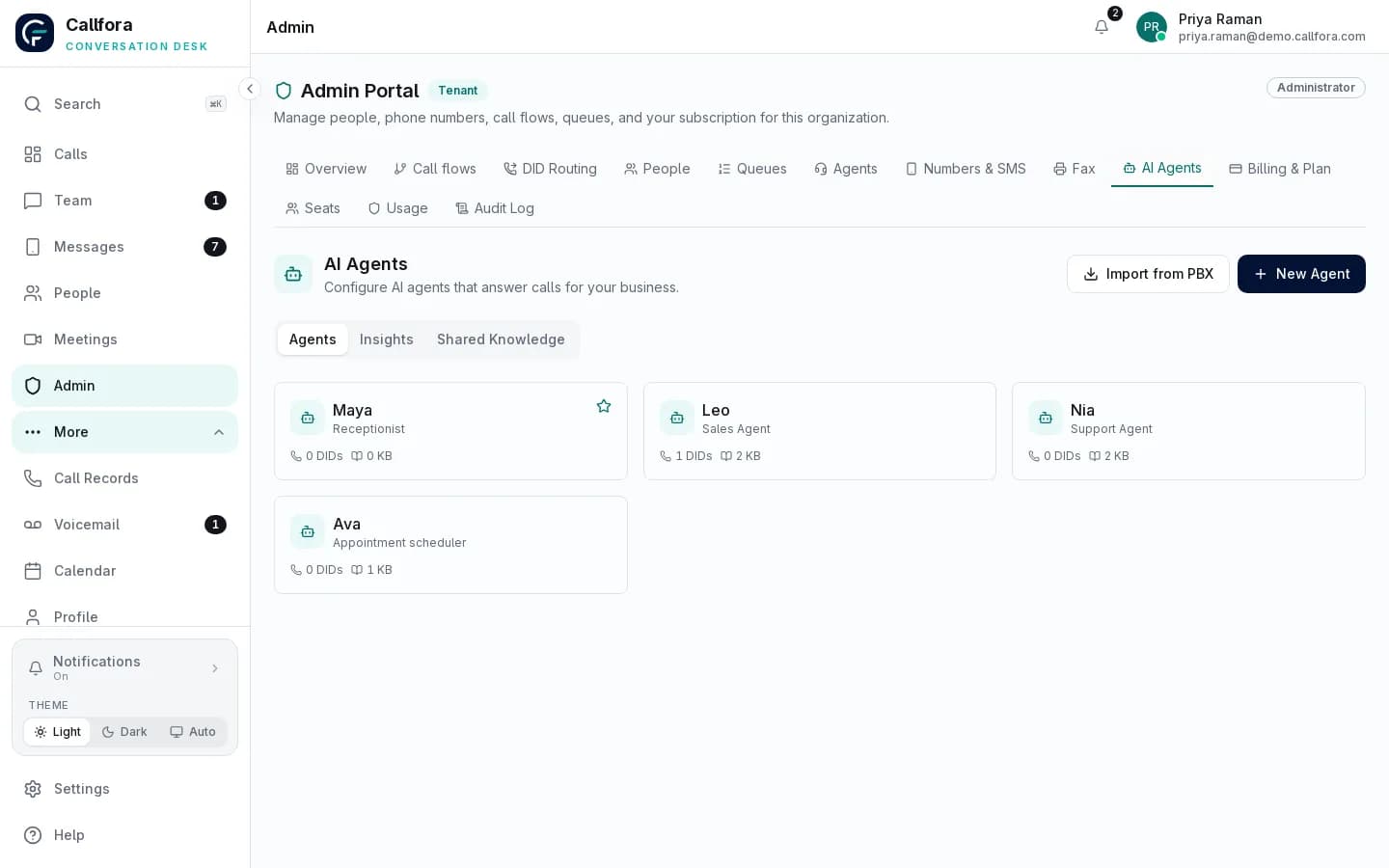
The FCC ruled in February 2024 (FCC 24-17) that AI-generated human-like voices are an artificial or prerecorded voice under the TCPA. Outbound AI calls therefore need the same consent as prerecorded calls and must identify the caller and offer opt-out where required. Inbound calls that callers start themselves are different, but recording and disclosure rules still apply. Some states, such as California, Utah, and Colorado, have laws on AI disclosure or high-risk automated decisions; effective dates are changing, so check current status.
6.Emergency calling
Kari's Law requires multi-line systems to allow direct 911 dialing and to notify a central point, and RAY BAUM'S Act requires dispatchable location information. Read our Emergency calling notice: the service may not send a location automatically, and you must configure addresses for each user and site.
This page is a general summary of how Callfora approaches the law in this region. It is not legal advice, laws change, and your obligations depend on your own facts. Ask your counsel before relying on it.
Need help with this document?
Choose the route that matches your question. These links do not replace the terms above.